
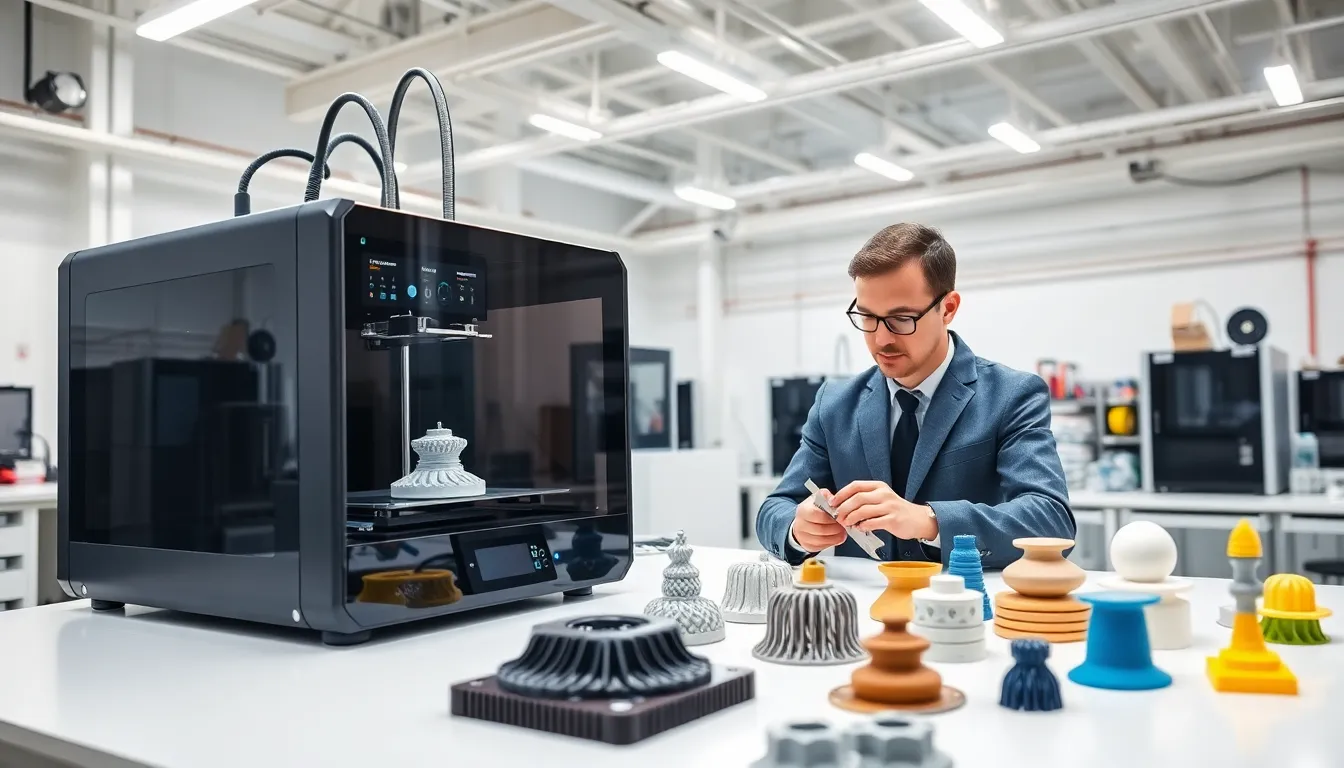
3D printing techniques have changed how people create physical objects from digital designs. From hobbyist workshops to industrial manufacturing floors, these methods offer different strengths depending on the project at hand. Some techniques excel at speed, while others deliver exceptional detail or material durability.
This guide covers the most common 3D printing techniques used today. It explains how each method works, what materials it uses, and where it performs best. Whether someone is prototyping a new product or producing end-use parts, understanding these options helps them make smarter decisions.
Table of Contents
ToggleKey Takeaways
- FDM is the most accessible 3D printing technique, offering low costs and material variety—ideal for prototyping and functional parts.
- SLA and resin-based 3D printing techniques deliver exceptional detail and smooth surfaces, making them perfect for jewelry, dental models, and miniatures.
- SLS uses laser-fused powder to create complex geometries without support structures, producing strong, functional end-use parts.
- Choose your 3D printing technique based on budget, detail requirements, material properties, and production volume.
- Combining multiple techniques—FDM for rough prototypes, SLA for presentations, SLS for final testing—optimizes project workflows and results.
Fused Deposition Modeling (FDM)
Fused Deposition Modeling, or FDM, ranks as the most widely used 3D printing technique. It works by heating a plastic filament and extruding it layer by layer onto a build platform. The printer follows a digital model, depositing material in precise patterns until the object takes shape.
FDM printers use thermoplastic materials like PLA, ABS, PETG, and nylon. PLA remains popular among beginners because it prints easily and produces minimal warping. ABS offers greater heat resistance and durability, making it suitable for functional parts.
Advantages of FDM
- Low cost: FDM printers and materials cost less than other 3D printing techniques
- Material variety: Users can choose from dozens of filament types with different properties
- Large build volumes: Many FDM machines handle objects up to 300mm or larger
- Accessibility: The technology suits home users, schools, and small businesses
Limitations of FDM
FDM prints show visible layer lines on the surface. This affects aesthetics and may require post-processing for smooth finishes. The technique also struggles with fine details and overhangs. Support structures often leave marks that need removal.
Even though these drawbacks, FDM remains the go-to 3D printing technique for rapid prototyping, educational projects, and functional parts where surface finish matters less than speed and cost.
Stereolithography (SLA) and Resin Printing
Stereolithography, known as SLA, uses light to cure liquid resin into solid plastic. A UV laser or LED screen projects patterns onto a vat of photopolymer resin. Each layer hardens in seconds, and the build platform rises to expose fresh resin for the next layer.
This 3D printing technique produces exceptional surface quality. Parts come out smooth with crisp edges and fine details. Layer heights can drop to 25 microns, roughly one-third the thickness of a human hair.
Types of Resin Printers
SLA printers use a laser to trace each layer point by point. MSLA (masked stereolithography) printers use an LCD screen to flash entire layers at once, speeding up print times significantly. DLP printers use a digital projector for similar results.
Common Applications
Resin 3D printing techniques shine in applications demanding precision:
- Jewelry casting: Jewelers print detailed wax-like patterns for lost-wax casting
- Dental models: Dentists create accurate molds for aligners and crowns
- Miniatures: Hobbyists print detailed figurines and game pieces
- Engineering prototypes: Designers test fit and form before production
Considerations
Resin printing requires more post-processing than FDM. Prints need washing in isopropyl alcohol and curing under UV light. The resins also produce fumes and require careful handling. Material costs run higher than FDM filaments, and build volumes tend to be smaller.
Still, when detail matters most, SLA and other resin-based 3D printing techniques deliver results that FDM simply cannot match.
Selective Laser Sintering (SLS)
Selective Laser Sintering represents an industrial-grade 3D printing technique. It uses a high-powered laser to fuse powdered material, typically nylon, into solid objects. Unlike FDM or SLA, SLS does not require support structures because the surrounding powder holds each layer in place.
This characteristic makes SLS ideal for complex geometries. Engineers can design interlocking parts, internal channels, and lattice structures that other 3D printing techniques cannot produce. The finished parts also exhibit excellent mechanical properties.
How SLS Works
- A roller spreads a thin layer of powder across the build platform
- The laser selectively fuses the powder according to the digital model
- The platform lowers, and a new powder layer spreads on top
- The process repeats until the part completes
- The part cools in the powder bed before removal
Materials and Properties
Nylon 12 (PA12) dominates SLS production. It offers good strength, flexibility, and chemical resistance. Some systems also process nylon 11, TPU for flexible parts, and glass-filled composites for added stiffness.
SLS parts have a slightly grainy surface texture. They accept dyes, paints, and other finishes well. Many manufacturers use SLS for end-use components, not just prototypes.
Cost Factors
SLS machines cost significantly more than desktop FDM or SLA printers. The technology suits production environments and service bureaus rather than home workshops. But, the ability to print functional parts without supports makes SLS attractive for certain 3D printing applications.
Choosing the Right Technique for Your Project
Each 3D printing technique serves different needs. The right choice depends on several factors: budget, required detail level, material properties, and production volume.
Decision Framework
Choose FDM when:
- Budget constraints matter most
- Surface finish ranks lower than speed
- Large parts need printing
- Specific material properties (heat resistance, flexibility) are required
Choose SLA/Resin when:
- Fine details and smooth surfaces are essential
- Parts will be used for casting or molding
- Accuracy takes priority over size
- Visual presentation matters
Choose SLS when:
- Complex geometries require support-free printing
- Functional strength and durability are critical
- Multiple parts need nesting in one build
- Production volumes justify higher costs
Hybrid Approaches
Many projects benefit from combining 3D printing techniques. A designer might use FDM for rough prototypes, switch to SLA for client presentations, and order SLS parts for final testing. Understanding each technique’s strengths allows teams to optimize their workflows.
Cost Comparison
| Technique | Machine Cost | Material Cost | Detail Level |
|---|---|---|---|
| FDM | Low | Low | Moderate |
| SLA/Resin | Medium | Medium-High | High |
| SLS | High | Medium | Medium-High |
The 3D printing technique that works best today might not suit tomorrow’s project. Flexibility comes from knowing what each method offers.